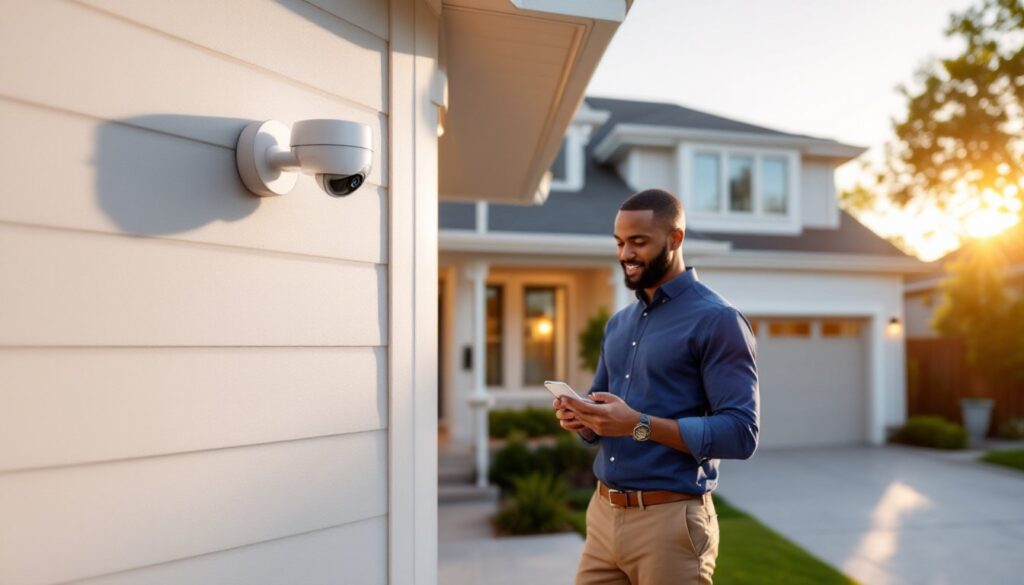
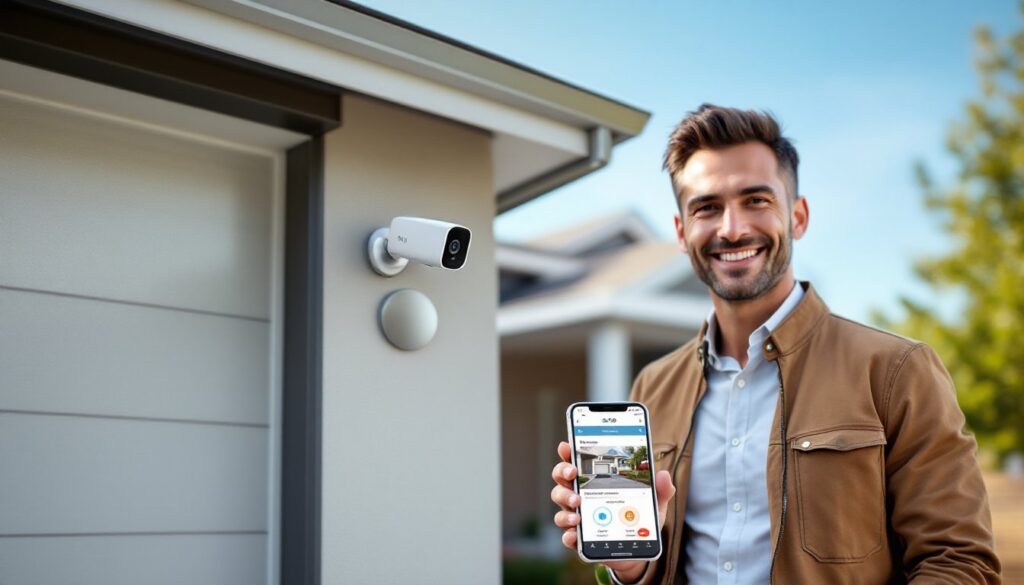
Outdoor security has come a long way from grainy footage and tangled coax cables. Today’s wireless security cameras for outside the home are sharper, smarter, and far easier to install than the hardwired systems of a decade ago. For homeowners who want eyes on the driveway, the side gate, or that one corner where packages keep disappearing, a good wireless setup pays for itself in peace of mind. This guide walks through what matters, where to mount, and the rookie mistakes that trip people up.
Table of Contents
ToggleKey Takeaways
- Wireless security cameras for outside eliminate the need for complex wiring and can be installed by homeowners in under an hour, making them ideal for renters and HOA properties.
- Prioritize an IP65 rating or higher, 1080p minimum video quality, and a 110°–160° field of view to ensure your outdoor camera performs reliably in weather and captures identifying details.
- Strategic placement on front doors, driveways, back doors, side gates, and detached structures at 7–10 feet high prevents tampering while capturing facial and license plate details.
- Pre-drill all mounting holes, seal penetrations with exterior silicone, and test Wi-Fi signal strength before installation to avoid water damage, poor connection, and underperforming footage.
- Choose a power solution that matches your climate and property: battery-only for simplicity, solar-assisted for sunny areas, or plug-in options for constant coverage without recharging.
- Customize motion detection zones and stay current with firmware updates to eliminate false alerts and protect against security vulnerabilities common in outdoor camera systems.
Why Wireless Outdoor Cameras Are a Game-Changer for Home Security
Traditional wired systems mean drilling through siding, fishing cable through soffits, and often calling in a low-voltage installer. Wireless cameras skip most of that. A homeowner with a drill, a ladder, and a smartphone can typically have a unit live in under an hour.
The shift matters for renters and homeowners alike. Battery-powered or solar-charged models leave no permanent scars on the structure, which is a big deal in HOA neighborhoods or rental properties. And because most modern security cameras push alerts directly to a phone, there’s no DVR humming away in a closet.
There’s also the integration angle. Many arlo wireless security camera systems, along with Ring, Eufy, and Google Nest, talk to smart speakers, smart locks, and even outdoor lighting. That means a single trigger, like motion at the back fence, can light up the yard and start recording simultaneously.
Key Features to Look for Before You Buy
Not every outdoor camera is built for outdoor life. Spec sheets can be misleading, so it pays to know which features actually matter once a unit is mounted six feet up in the rain.
Weatherproof Ratings, Night Vision, and Video Quality
Look for an IP65 rating or higher. IP65 means dust-tight and protected against water jets, which covers most rain, snow, and sprinkler scenarios. IP66 and IP67 step things up for heavy weather.
For video, 1080p is the practical minimum in 2026, and 2K has become standard on mid-tier models. 4K is nice but eats bandwidth and storage. Night vision splits into two camps: traditional infrared (black-and-white) and color night vision, which uses a built-in spotlight. Color is better for identifying clothing or vehicles: IR is more discreet.
A wide field of view (110°–160°) covers more ground, but anything past 160° introduces fisheye distortion. Tom’s Guide has a solid breakdown of what to consider before installing an outdoor camera if a deeper feature comparison is helpful.
Power Sources: Battery, Solar, and Plug-In Options
Each power option has trade-offs:
- Battery-only: Easiest install, but expect to recharge every 3–6 months depending on motion activity.
- Solar-assisted: A small panel (often sold separately) keeps the battery topped off. Works well in sunny climates, less so under heavy tree cover.
- Plug-in (low-voltage): Constant power, no downtime, but requires an exterior outlet or a weatherproof extension run.
For anyone running multiple cameras, a hybrid setup, plug-in at the front door, solar at the back fence, tends to be the most reliable.
Best Placement Spots Around Your Property
Placement matters more than megapixels. A 4K camera aimed at a brick wall is useless: a 1080p unit covering the front walk is gold.
The priority zones for most homes:
- Front door and porch, roughly 80% of package theft happens here.
- Driveway, captures vehicle approaches and license plates.
- Back door or patio, secondary entry points are common targets.
- Side gates and fence lines, especially where visibility from the street is blocked.
- Detached structures, sheds, garages, and ADUs often hold valuable tools.
Mount cameras 7 to 10 feet off the ground. Lower than that invites tampering: higher reduces facial detail. Angle slightly downward, and avoid pointing directly at the rising or setting sun, which can wash out footage for hours. For homeowners pairing cameras with motion sensor security cameras or smart lighting, overlapping coverage zones reduce blind spots.
DIY Installation Tips for a Reliable Setup
Most wireless cameras ship with a basic mounting plate, two or three screws, and drywall-style anchors. Those anchors are fine for vinyl siding but won’t hold in stucco or brick.
A few tips that separate a clean install from a flopping camera:
- Pre-drill every hole. Use a masonry bit for brick or stucco, a standard twist bit for wood trim.
- Hit a stud when possible. Soffits and fascia boards are typically 1x material backed by framing, generally safe: loose siding is not.
- Seal penetrations with exterior-grade silicone. Water intrusion behind siding is a slow, expensive problem.
- Test Wi-Fi signal first. Most cameras need a minimum of 2 bars at the mounting location. A mesh node or Wi-Fi extender often solves dead spots.
Wear safety glasses and gloves when drilling overhead, debris falls fast. A cordless drill handles 90% of these jobs, though a hammer drill is worth borrowing for masonry. Budget-friendly options like the tapo security camera lineup or the blink whole home bundle make multi-camera installs more affordable for first-timers.
If a camera needs hardwired power and there’s no exterior outlet nearby, that’s where things shift from DIY to electrician territory. Running new exterior circuits falls under NEC Article 210 and typically requires a permit. Codes vary by jurisdiction, so check locally before cutting into walls.
Common Mistakes to Avoid With Outdoor Wireless Cameras
Even a well-chosen home security camera can underperform if the basics are skipped. The most frequent missteps:
- Ignoring Wi-Fi range. A camera 80 feet from the router, through two exterior walls, will drop connection. Test before mounting.
- Skipping motion zone configuration. Out of the box, most cameras alert on every leaf and stray cat. Custom zones cut false alerts dramatically.
- Forgetting about subscription costs. Some brands lock cloud recording behind monthly fees. Local storage options like the eufy security camera lineup or the aosu camera system sidestep that cost entirely.
- Mounting too high. Faces become unidentifiable past about 10 feet.
- Neglecting firmware updates. Outdated firmware is a known security vulnerability: sites like CNET’s smart home coverage and Digital Trends regularly flag which brands lag on patches.
For homeowners weighing DIY against professional monitoring, vivint security cameras represent the monitored end of the spectrum, useful context when deciding how much self-management feels right.
The right outdoor camera isn’t the most expensive one, it’s the one that gets installed correctly, stays powered, and actually gets checked when an alert comes in. Start with one well-placed unit, learn its quirks, and expand from there. A thoughtful two-camera setup almost always outperforms a hasty four-camera sprawl.