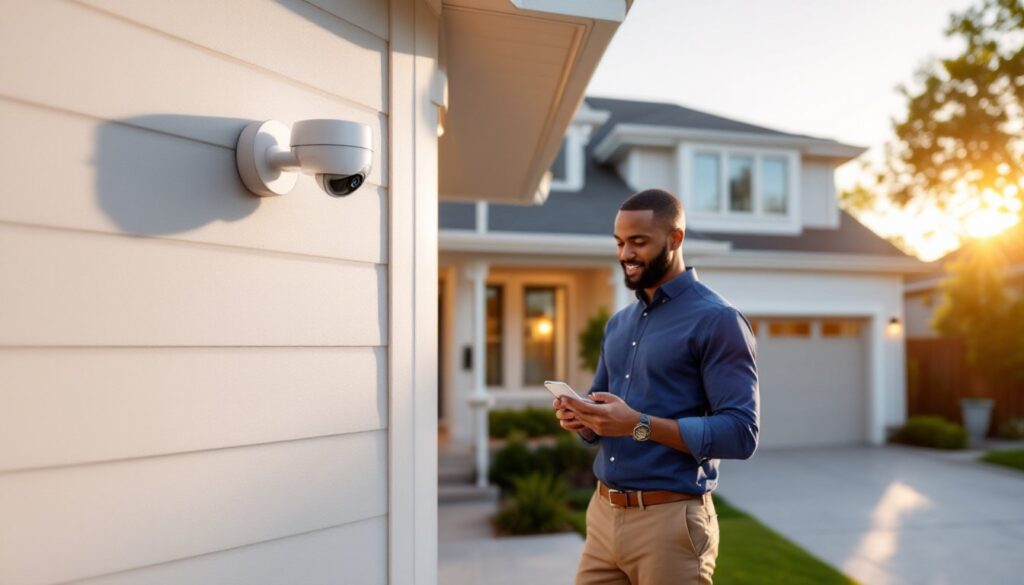
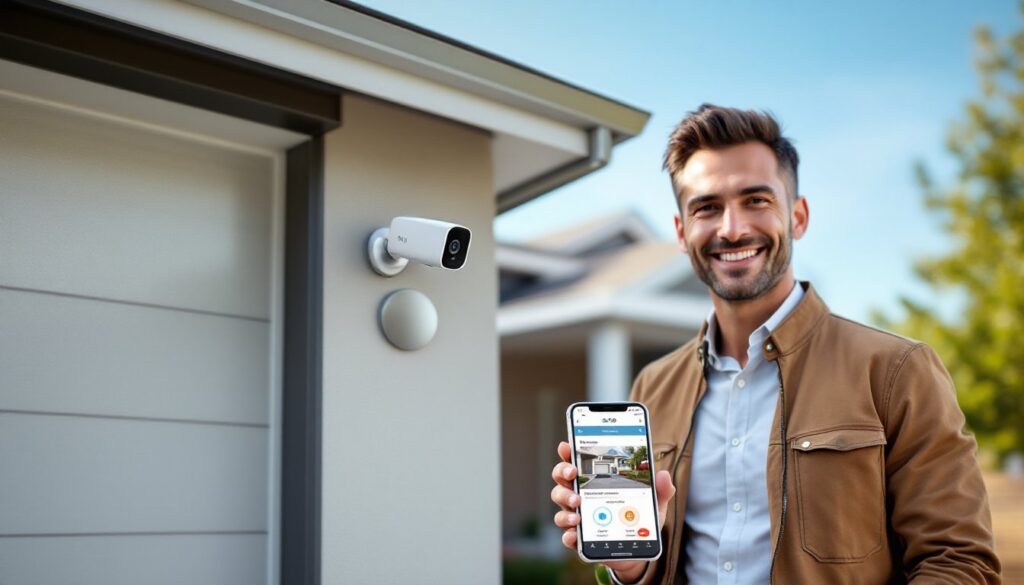
Stringing cable through walls and attics used to be the price of admission for home security. Not anymore. Battery-powered security cameras have turned what was once a half-day wiring project into a 15-minute mount-and-go installation. No electrician, no running wire through insulation, and no outlet dependency. These wire-free cameras operate on rechargeable battery packs, connect via Wi-Fi, and send alerts straight to a smartphone. They’ve opened up outdoor monitoring for renters, seasonal properties, and anyone who wants surveillance coverage without the commitment, or expense, of hardwired systems.
Table of Contents
ToggleKey Takeaways
- Battery security cameras eliminate the need for wiring and professional installation, transforming home surveillance from a half-day project into a 15-minute mount-and-go setup.
- Battery life depends heavily on motion events and temperature, with busy areas requiring recharging every 3-4 weeks and cold weather reducing runtime by 30-50%.
- A battery security camera typically costs $150-$300 for a two-camera system compared to $500+ for hardwired alternatives, plus they offer local storage options to avoid monthly cloud subscription fees.
- Optimal placement at 7-9 feet high with a 15-30° downward angle captures clear facial details while preventing tampering, and secondary entry points like windows and side gates deserve coverage since burglars use multiple approaches.
- Solar panel accessories can eliminate recharging cycles entirely in sunny climates, while consistent Wi-Fi signal strength (minimum -70 dBm) is critical for reliable upload and live view functionality.
- DIY installation requires a cordless drill, appropriate fasteners, and careful attention to level positioning, with medium motion sensitivity as a starting point that can be adjusted after reviewing initial footage.
What Are Battery Security Cameras and How Do They Work?
Battery security cameras are self-contained surveillance units that run entirely on rechargeable lithium-ion battery packs. Unlike traditional wired cameras that draw constant power from an outlet or low-voltage transformer, these devices store enough charge to operate for weeks or months depending on activity levels and settings.
The mechanics are straightforward. A motion sensor, typically a passive infrared (PIR) detector, triggers recording when it detects heat movement in the camera’s field of view. The camera wakes from a low-power sleep mode, captures video (usually in 1080p or higher resolution), and uploads the clip to cloud storage or a local base station via Wi-Fi. Some models include local microSD card slots for redundant recording.
Battery drain depends heavily on usage. A camera monitoring a busy driveway might record 50+ clips per day and need recharging every 3-4 weeks. One aimed at a backyard gate with minimal foot traffic could stretch to 3-6 months between charges. Cold weather accelerates drain, lithium-ion batteries lose capacity below 32°F, so expect shorter runtime in winter installations.
Most units use proprietary battery packs that slide or snap into the camera housing. Charging typically requires removing the battery and connecting it to a USB or magnetic charging cable, though some manufacturers offer solar panel accessories that trickle-charge the battery in place. This eliminates the recharge cycle entirely if the panel receives adequate sunlight.
Top Benefits of Choosing Battery-Powered Security Cameras
Installation flexibility tops the list. Battery cameras mount anywhere within Wi-Fi range, no need to locate nearby outlets or run conduit. This makes them ideal for detached garages, shed doors, fence lines, and entry gates that sit far from power sources. Renters appreciate the zero-damage installation: a single screw or adhesive mount leaves minimal trace when it’s time to move.
Quick deployment matters during renovations or seasonal use. Cabin owners can install perimeter cameras in spring and pull them indoors for winter. Construction sites benefit from temporary surveillance that relocates as phases progress. There’s no wiring to abandon or reroute.
Power outage immunity keeps cameras operational when hardwired systems go dark. Battery units continue recording during storms or grid failures, though they’ll lose connectivity if the Wi-Fi router also loses power. Pairing with a UPS-backed router solves this.
Lower upfront cost often tilts the decision. A two-camera battery system typically runs $150-$300, while a comparable hardwired PoE (Power over Ethernet) setup requires a network video recorder, PoE switch, and professional installation, easily $500+. For users prioritizing home security cameras no subscription fees, battery models frequently offer local storage options that bypass monthly cloud fees entirely.
The trade-off? Battery cameras require ongoing maintenance. Hardwired cameras run indefinitely: battery models need attention every few weeks to months.
Key Features to Look For When Shopping
Video Quality and Night Vision
Resolution starts at 1080p (1920×1080 pixels) for budget models and climbs to 2K (2560×1440) or 4K (3840×2160) on premium units. Higher resolution eats battery faster but delivers clearer license plate and facial detail at distance. A 2K camera offers a good balance, sharp enough to identify faces at 15-20 feet without the battery penalty of 4K.
Field of view (FOV) typically ranges from 110° to 160°. Wider angles cover more area but distort edges and reduce center detail. A 130° FOV works well for most door and driveway applications. Narrower lenses (90-110°) suit focused monitoring of gates or walkways.
Night vision comes in two flavors: infrared (IR) and color night vision. Standard IR illuminates the scene with invisible 850nm or 940nm LEDs, producing black-and-white footage up to 25-30 feet. Color night vision uses a combination of low-light sensors and white LED spotlights to maintain color detail, helpful for identifying vehicle colors or clothing, but the spotlight can be intrusive in residential areas. According to reviews from leading tech publications, newer starlight sensors deliver usable color footage in ambient light as low as 0.01 lux without auxiliary lighting.
Battery Life and Charging Options
Rated battery life varies wildly. Manufacturers quote 2-6 months under “typical use,” which they define as 10-20 motion events per day. Real-world performance depends on:
- Motion sensitivity settings: Higher sensitivity triggers more false recordings from swaying branches, passing cars, or sun glare.
- Video length: Longer clips (30-60 seconds) drain batteries faster than short 10-15 second clips.
- Live view frequency: Streaming live video bypasses the power-saving sleep mode.
- Temperature: Expect 30-50% shorter life below freezing.
Rechargeable vs. replaceable batteries matters for maintenance. Most battery cameras use proprietary rechargeable packs ($20-$40 for spares). Buying a second battery lets users hot-swap without downtime. A few models accept standard rechargeable AA or CR123A batteries, convenient for remote locations but more expensive over time.
Solar panel compatibility extends runtime indefinitely in sunny climates. Panels typically provide 2-5 watts via a weatherproof cable, enough to offset daily usage. They work best on south-facing mounts (in the Northern Hemisphere) with 4+ hours of direct sun. Shaded locations or overcast regions won’t generate sufficient charge.
Best Placement Strategies for Maximum Coverage
Entry points take priority. Mount cameras 7-9 feet high aimed downward at a 15-30° angle. This height deters tampering while capturing clear facial shots as people approach. Avoid aiming cameras directly at bright light sources (streetlights, porch lights, setting sun), it washes out detail and triggers false motion alerts.
Overlap coverage where possible. A front door camera should catch the porch and walkway: a second camera on the garage covers the driveway and approach. This redundancy ensures one camera catches what another might miss due to blind spots or Wi-Fi dropouts.
Wi-Fi signal strength dictates practical range. Battery cameras need consistent connectivity to upload clips. Test signal strength with a smartphone at the proposed mount location before drilling. Most cameras require a minimum of -70 dBm signal strength (typically 2-3 bars). Weak signals cause failed uploads, increased battery drain as the camera retries transmission, and laggy live view. Wi-Fi extenders or mesh systems solve range issues for distant outbuildings.
Weather exposure affects longevity. While most battery cameras carry IP65 or IP66 ratings (dust-tight, resistant to water jets), mounting under eaves or porch overhangs reduces direct rain and snow accumulation on the lens. In regions with heavy snow, angle cameras downward steeply enough that snow slides off rather than piling on the lens.
Avoid private spaces. Cameras shouldn’t capture neighbors’ yards, bedroom windows, or public sidewalks beyond the property line. Many jurisdictions have privacy laws governing surveillance: violating them can bring fines or civil liability. If a camera’s FOV unavoidably includes a neighbor’s space, mask that zone in the camera’s app settings.
Don’t overlook secondary entry points. According to crime prevention research, 34% of burglars enter through the front door, but 23% use first-floor windows and 9% come through the garage. Side gates, basement entrances, and sliding patio doors deserve coverage too.
Installation Tips for DIY Homeowners
Tools and materials for a basic mount:
- Cordless drill/driver with assorted bits
- Masonry bit (if mounting to brick, stone, or stucco)
- Level (a 4-6″ torpedo level works fine)
- Pencil for marking holes
- Appropriate fasteners: #8 or #10 wood screws (1.5-2″ length) for wood siding or trim: plastic anchors and screws for drywall: masonry anchors for brick or concrete
- Ladder rated for your weight plus 25%
- Safety glasses
Step-by-step process:
-
Charge the battery fully before starting. Cameras won’t pair with the app or function properly on a dead battery.
-
Download the manufacturer’s app and create an account. Complete camera pairing indoors near the Wi-Fi router before mounting outside. This confirms the camera works and prevents troubleshooting on a ladder.
-
Scout the mounting location with the camera in hand. Use the app’s live view to verify the frame captures the desired area. Mark the screw holes with a pencil.
-
Pre-drill pilot holes. For wood surfaces, use a bit slightly smaller than the screw diameter (e.g., 1/8″ pilot for a #10 screw). For masonry, drill with a masonry bit matching the anchor size, tap in plastic anchors, then drive screws.
-
Mount the bracket with screws. Check level, a crooked camera produces skewed footage that’s disorienting to review. Most mounts allow 5-10° of tilt adjustment after installation.
-
Attach the camera to the bracket. Magnetic mounts snap on with a satisfying click: screw-on mounts typically use a thumbscrew or security screw (requiring a proprietary bit to deter theft).
-
Adjust the angle via live view. Walk through the camera’s field of view to confirm motion detection zones cover high-traffic areas without triggering on passing cars or distant sidewalks.
-
Seal penetrations if screws pierce siding or trim. A dab of clear silicone caulk around each screw prevents water intrusion. Wipe away excess with a damp rag before it cures.
Safety notes: Always use a ladder on stable, level ground. If mounting above 10 feet or on a steep slope, recruit a helper to stabilize the ladder. Wear safety glasses when drilling overhead, bits throw debris. If drilling near electrical wiring (common around porch lights or outlets), shut off power to that circuit and use a non-contact voltage tester to confirm wires are dead.
Most battery cameras don’t require permits since they’re low-voltage and non-structural. But, HOA rules or rental agreements may restrict exterior modifications. Check before drilling.
Initial configuration: Set motion sensitivity to medium and record 15-20 second clips as a starting point. Review footage for a few days, then adjust. High sensitivity captures every leaf flutter: low sensitivity might miss a person moving slowly. Activity zones (available on most cameras) let users mask areas that trigger false alerts, like a busy street or swaying tree branch.
Some outdoor security camera reviews recommend testing at night to verify IR illumination reach and adjust angles if reflections from glass or shiny surfaces wash out the image.