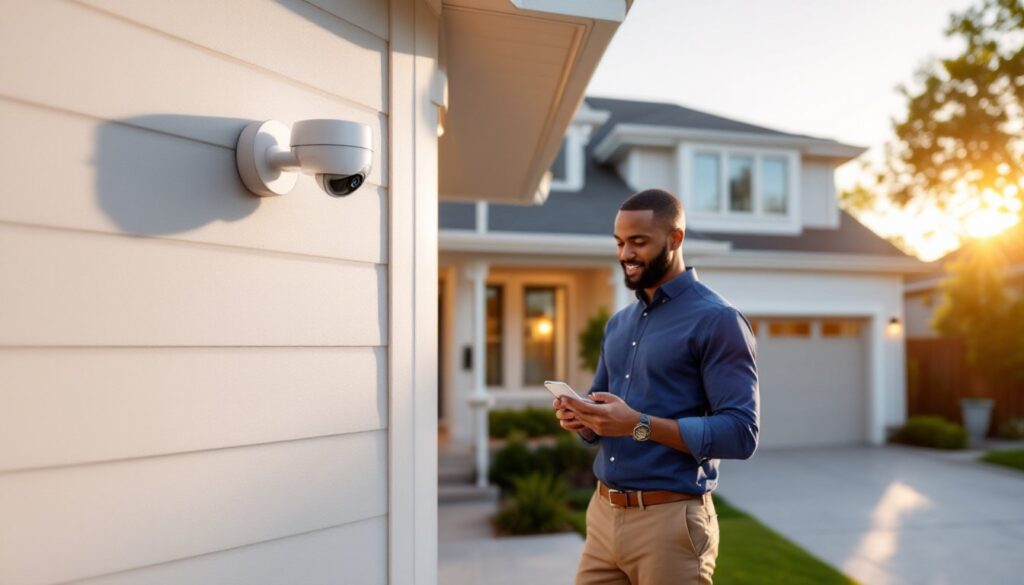
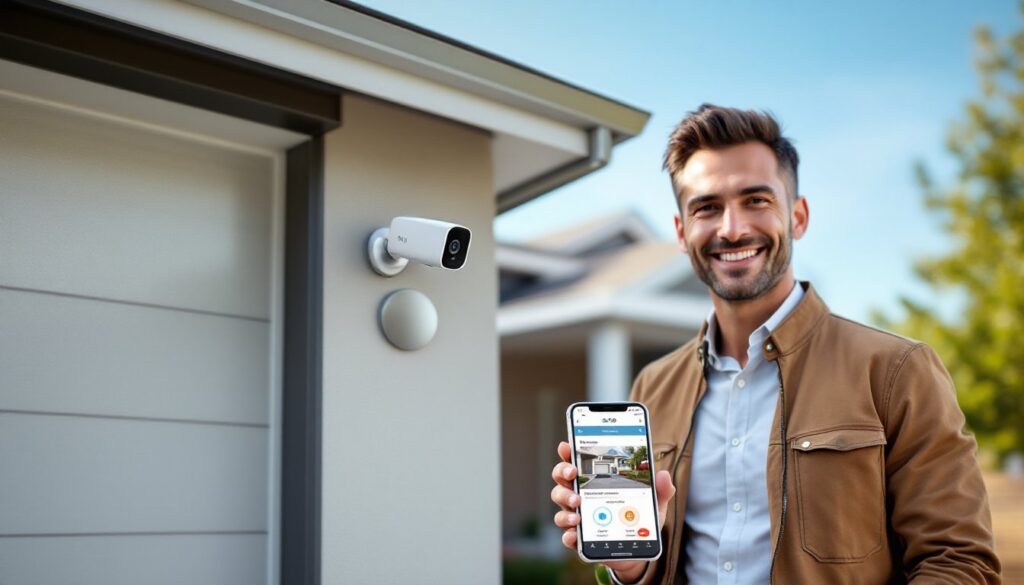
Outdoor security cameras are essential, but running electrical wiring to a detached garage, side gate, or back fence line can cost hundreds in labor alone. Solar powered wireless security cameras eliminate that headache entirely, no trenching, no electrician, and no monthly subscription fees if you choose the right model. These cameras combine rechargeable battery packs with integrated solar panels, delivering continuous operation in locations where traditional wired cameras simply aren’t practical. As solar technology has improved and battery capacity has grown, these systems have become genuinely viable for year-round monitoring in most climates, not just sunny regions.
Table of Contents
ToggleKey Takeaways
- Solar powered wireless security cameras eliminate expensive electrical wiring and labor costs while providing reliable monitoring in remote locations like detached garages and side gates.
- Battery capacity (8,000+ mAh) and solar panel wattage (3W+) are critical specifications that determine how well your solar powered wireless security camera handles cloudy weeks and high-traffic areas.
- Proper placement facing south with minimal shading, tilt angles matching your latitude, and quarterly maintenance of the solar panel maximize energy efficiency and system longevity.
- Event-driven motion detection recording conserves battery life by allowing cameras to enter low-power sleep mode, extending runtime without sacrificing security coverage.
- Look for at least 1080p resolution, IP65+ weather rating, two-way audio, and local microSD storage to avoid monthly subscription fees while capturing clear, usable footage year-round.
What Is a Solar Powered Wireless Security Camera?
A solar powered wireless security camera is a self-contained surveillance unit that operates without hardwired electrical connections or network cables. It uses a rechargeable battery (typically lithium-ion, ranging from 5,000 to 10,000 mAh capacity) as its primary power source, with a small solar panel, usually 2W to 5W output, continuously topping off the battery during daylight hours.
The “wireless” designation refers to both power and connectivity. These cameras connect to your home network via Wi-Fi (2.4 GHz or dual-band 5 GHz), eliminating the need for Ethernet cables. Some models also support LTE cellular connections as a backup, useful for properties without reliable Wi-Fi coverage at the perimeter.
Unlike wired cameras that require conduit runs, junction boxes, and often a licensed electrician for exterior installations, solar cameras mount with basic hardware, lag bolts into wood, concrete anchors into masonry, or U-bolts around poles. The solar panel is either integrated into the camera housing or connected via a short weatherproof cable, typically 10 to 15 feet long, allowing flexible placement for optimal sun exposure.
Most units store recorded footage locally on a microSD card (up to 256GB) or in cloud storage, with motion-triggered recording to conserve battery life. Continuous recording is possible but drains batteries faster than solar panels can recharge in most residential setups.
Key Benefits of Choosing Solar Powered Security Cameras
Zero operating costs. Once installed, solar cameras run indefinitely without increasing your electric bill. A typical wired camera draws 4-8 watts continuously: over a year, that’s 35-70 kWh per camera. Solar eliminates that draw entirely.
Installation anywhere. Detached sheds, barn doors, driveway gates, boat docks, RV pads, locations where running power is expensive or impossible become viable monitoring points. This flexibility is especially valuable for rural properties or new construction where electrical infrastructure isn’t yet complete.
No subscription required (on many models). Unlike some proprietary systems that lock basic recording features behind monthly fees, many solar cameras offer local storage via microSD cards. Cloud storage is optional, not mandatory. Homeowners considering Home Security Cameras No Subscription options will find solar models a natural fit.
Quick relocation. If you need to monitor a different area, say, during a home addition or after changing a yard layout, solar cameras unmount in minutes and reinstall just as quickly. No patching drywall, no rewiring.
Storm resilience. In power outages, wired cameras go dark unless they’re on a UPS or generator. Solar cameras keep running as long as their batteries have charge, providing security precisely when you need it most.
How Solar Powered Wireless Cameras Work
The solar panel converts sunlight into DC electricity, which flows through a charge controller to prevent overcharging the battery. The charge controller regulates voltage, usually 5V to 6V, ensuring the battery receives a safe, steady trickle charge.
During the day, the solar panel supplies power to both the camera’s operating load and the battery. At night or during cloudy weather, the camera draws exclusively from the battery. A well-sized system generates more energy than the camera consumes daily, maintaining a net positive charge balance.
Power consumption varies by activity. In standby mode, most cameras draw 0.5W to 1W. When actively recording or streaming live video, consumption spikes to 2W to 4W. Motion detection triggers, two-way audio, infrared night vision LEDs, and pan-tilt motors all increase draw.
Battery capacity is measured in milliamp-hours (mAh) or watt-hours (Wh). A 10,000 mAh battery at 3.7V nominal voltage holds roughly 37 Wh of energy. If the camera averages 1W draw, that’s 37 hours of runtime, but real-world performance depends on motion events, temperature (cold degrades lithium-ion performance), and Wi-Fi signal strength (weak signals increase transmission power).
Modern solar cameras use PIR (passive infrared) motion sensors to wake from a low-power sleep mode. When motion is detected, the camera powers up the image sensor, begins recording, and sends a push notification to your smartphone. This event-driven operation is critical to battery longevity: continuous recording would deplete even a large battery in 24-48 hours without strong solar input.
Essential Features to Look for When Buying
Resolution and field of view. Aim for at least 1080p (1920×1080) resolution: 2K (2560×1440) or 4MP sensors provide better detail for identifying faces or license plates. A 110° to 130° field of view covers most doorways and driveways without distortion.
Battery capacity and solar panel wattage. Larger batteries (8,000+ mAh) and higher-wattage panels (3W+) handle cloudy weeks and high-traffic areas better. Reviews on platforms like Digital Trends often benchmark real-world battery performance across seasons.
Night vision range. Infrared LEDs should illuminate at least 25 to 30 feet for useful nighttime footage. Some premium models offer color night vision using ambient light or integrated spotlights, which can deter intruders more effectively than invisible IR.
Weather resistance. Look for an IP65 rating or higher (IP66, IP67). IP65 means dust-tight and protected against water jets: IP66 adds resistance to powerful jets. Operating temperature range matters too, cameras rated for -4°F to 122°F (-20°C to 50°C) handle most North American climates.
Two-way audio. Built-in microphone and speaker allow you to communicate with delivery drivers or warn off trespassers. Audio quality varies widely: check reviews for clarity and volume.
Smart detection. AI-powered person/vehicle detection reduces false alerts from swaying branches or animals. Some cameras distinguish between people, pets, and packages, sending tailored notifications.
Local and cloud storage options. A microSD card slot supporting at least 128GB gives weeks of motion-triggered recordings without cloud fees. If you choose cloud storage, confirm whether it requires a subscription and what the monthly cost covers. Product testing from sites like CNET can clarify hidden fees.
Pan-tilt-zoom (PTZ) capability. Cameras with motorized mounts cover wider areas and allow remote positioning. This adds complexity and power draw, so ensure the solar panel can keep up.
Best Placement Tips for Maximum Solar Efficiency
South-facing placement (Northern Hemisphere). Solar panels generate maximum output when facing true south in the continental U.S. and Canada. Even a 30° deviation reduces daily energy harvest by 10-15%.
Minimize shading. Trees, roof eaves, or nearby structures that cast shadows during midday dramatically cut solar input. Use a sun path app or simply observe the location at 10 AM, noon, and 2 PM to identify shading issues. Even partial shade on a small panel can drop output by 50% or more.
Tilt angle. For year-round performance, tilt the solar panel at an angle roughly equal to your latitude. For example, at 40° N latitude (Denver, Philadelphia), a 40° tilt optimizes annual energy capture. Most integrated panels are fixed, but adjustable external panels let you fine-tune this.
Height and accessibility. Mount cameras 8 to 10 feet high, low enough to capture facial details, high enough to deter tampering. If the solar panel is separate, position it higher or farther from foot traffic to prevent theft or vandalism.
Wi-Fi signal strength. Before finalizing placement, test Wi-Fi strength with your phone at the mounting location. Weak signal (<50% strength) forces the camera to boost transmission power, increasing battery drain. Consider a Wi-Fi range extender or mesh network node if coverage is marginal.
Avoid reflective surfaces. Mounting near windows or metal siding can create glare or false motion triggers from reflections. Stone, wood, or vinyl siding provides a better backdrop.
Installation and Maintenance Best Practices
Tools and materials:
- Drill/driver with bits for pilot holes (masonry or wood, depending on surface)
- Lag bolts (1/4″ × 2″ for wood) or concrete anchors (1/4″ diameter for masonry)
- Level or smartphone level app
- Ladder rated for your weight plus 50 lbs (Type I or IA)
- Safety glasses (drilling overhead)
- Weatherproof silicone sealant for any cable entry points
Step-by-step installation:
- Charge the battery fully before installation. Most cameras ship partially charged: topping off via USB takes 4-6 hours and ensures the camera operates reliably during setup.
- Mark mounting holes using the camera’s base plate as a template. Use a level to ensure the camera isn’t tilted unless you’re intentionally angling it.
- Drill pilot holes. For wood, use a bit slightly smaller than the lag bolt shank. For masonry, use a masonry bit matching the anchor diameter and drill to the anchor’s depth.
- Insert anchors (if mounting to brick, stucco, or concrete block) and tap flush with a hammer.
- Attach the mounting bracket with lag bolts or screws. Tighten firmly, the camera and solar panel will catch wind load.
- Connect the solar panel cable to the camera (if using a separate panel). Route the cable along eaves or siding, securing with cable clips every 12-18 inches. Seal any penetrations through siding with silicone.
- Snap or screw the camera onto the bracket and adjust the viewing angle. Most mounts offer 180° to 360° rotation and tilt adjustment.
- Power on and pair with your Wi-Fi network using the manufacturer’s app. Follow the on-screen prompts to connect, set motion zones, and configure alerts.
Ongoing maintenance:
- Clean the solar panel quarterly with a damp microfiber cloth. Dust, pollen, and bird droppings cut efficiency. Avoid abrasive cleaners that scratch the panel surface.
- Check battery health via the camera app. If runtime drops noticeably after a year or two, the battery may need replacement. Some models have user-replaceable batteries: others require return to the manufacturer.
- Update firmware when prompted. Manufacturers release updates to patch security vulnerabilities, improve motion detection accuracy, and extend battery life through software optimization.
- Inspect mounting hardware annually. Lag bolts can work loose in wood as it expands and contracts with humidity: retighten if needed.
- Clear vegetation that grows into the camera’s field of view or shades the solar panel. A shrub that was 3 feet tall in spring may reach 6 feet by summer.
Conclusion
Solar powered wireless security cameras solve real problems, monitoring remote areas without trenching power lines, avoiding monthly subscription fees, and maintaining security during outages. Success depends on matching battery capacity and solar panel output to your climate and camera activity level, placing the panel where it gets unobstructed midday sun, and maintaining components so they last years, not months. Done right, a solar camera delivers reliable, wire-free protection without recurring costs or complicated installation.